
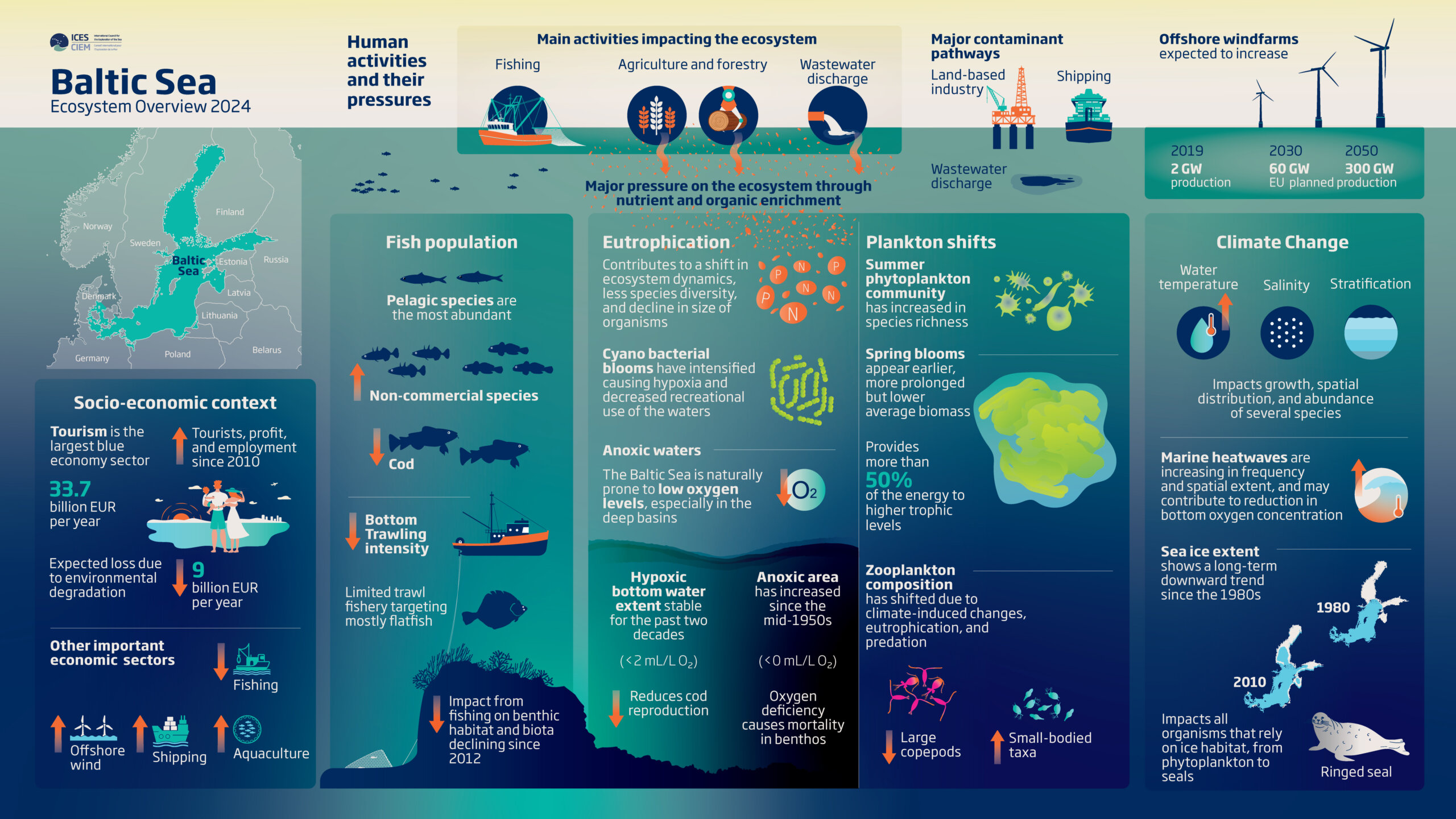
Our Ecosystem Overviews use risk-based methods to identify the main human pressures and explain how these affect key ecosystem components in each ICES ecoregion.
The Baltic Sea is one of the largest brackish water bodies in the world, covering 420 000 km2. It is a semi-enclosed shallow
sea with an average depth of 60 m, where one third of the area is less than 30 m deep. This ecoregion has many islands and a long and diverse coastline, especially in the northern areas. It is characterized by strong temperature and salinity gradients, from relatively warmer and saline waters in the southwestern part to cold and almost freshwater in the northernmost parts.
Many species and habitats of the Baltic Sea are not in good condition, according to recent assessments. This affects foodweb functionality, reduces the resilience and resistance against further environmental changes, and diminishes prospects for socioeconomic benefits, including fishing opportunities.